Language Therapy for Children
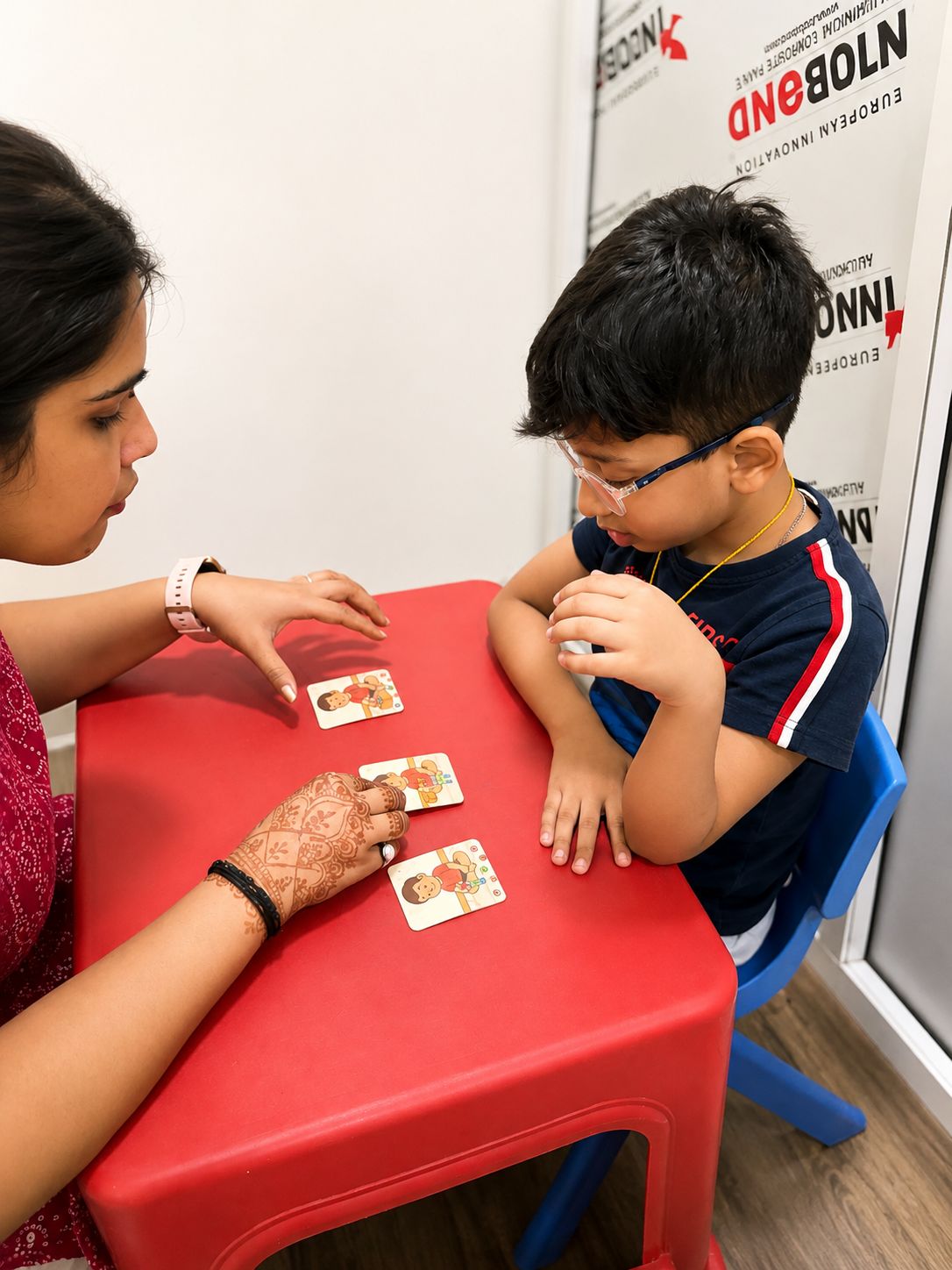
Language therapy focuses on helping children develop receptive (understanding) and expressive (using) language skills. We address vocabulary development, sentence structure, comprehension, and social communication to help children express themselves effectively.
Receptive Language
Building comprehension skills through listening activities, following directions, and understanding concepts.
Expressive Language
Developing vocabulary, grammar, and sentence formation through storytelling, role-play, and structured activities.
Social Communication
Teaching pragmatic language skills including turn-taking, topic maintenance, and understanding social cues.
Augmentative Communication
Using picture systems, gestures, and technology to support children who need alternative communication methods.
Key Benefits
Frequently Asked Questions
What is the difference between speech and language therapy?
Speech therapy focuses on producing sounds correctly, while language therapy addresses understanding and using words and sentences. They often overlap and may be combined.
How do you assess my child's language skills?
We use standardized assessment tools, observation, and parent interviews to create a comprehensive profile of your child's language abilities and areas for growth.
Can language therapy help with reading difficulties?
Yes! Strong language skills are foundational for reading. Language therapy often improves reading comprehension, vocabulary, and literacy skills.
Interested in Language Therapy?
Schedule a consultation to discuss how language therapy can benefit your child.
Book an Appointment