Sensory Integration Therapy
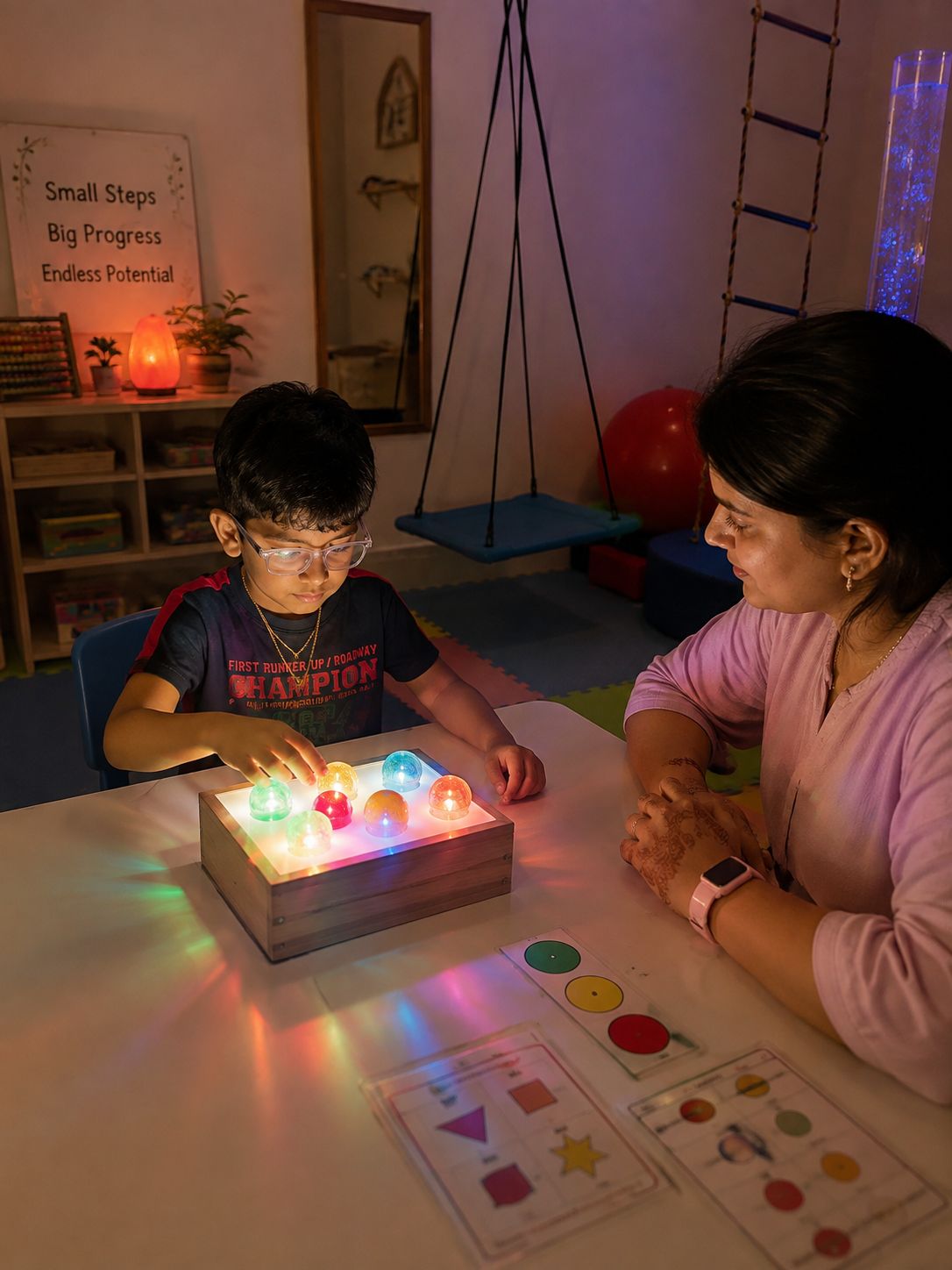
Sensory integration therapy helps children who have difficulty processing and responding to sensory information from their environment. Through carefully designed activities, we help children better understand and respond to sensory input, improving their ability to function in daily life.
Sensory Assessment
Comprehensive evaluation of sensory processing patterns using standardized tools to identify specific sensory needs.
Sensory Diet
Individualized activity plans that provide the right type and amount of sensory input throughout the day.
Environmental Modifications
Guidance on adapting home and school environments to support sensory processing needs.
Therapeutic Activities
Structured play activities involving swinging, jumping, tactile exploration, and vestibular stimulation.
Key Benefits
Frequently Asked Questions
What are signs of sensory processing difficulties?
Signs include over-sensitivity to sounds/textures/lights, difficulty with movement activities, seeking intense sensory input, poor body awareness, and difficulty with transitions.
Is sensory integration therapy evidence-based?
Yes, sensory integration therapy has a strong research base supporting its effectiveness for children with sensory processing challenges.
Can sensory issues affect academic performance?
Absolutely. Sensory difficulties can impact concentration, handwriting, sitting still, and tolerating classroom environments, all of which affect learning.
Interested in Sensory Integration?
Schedule a consultation to discuss how sensory integration can benefit your child.
Book an Appointment